Homeowners Don't Want AI. They Want You (To Show Up On Time, Prepared.)
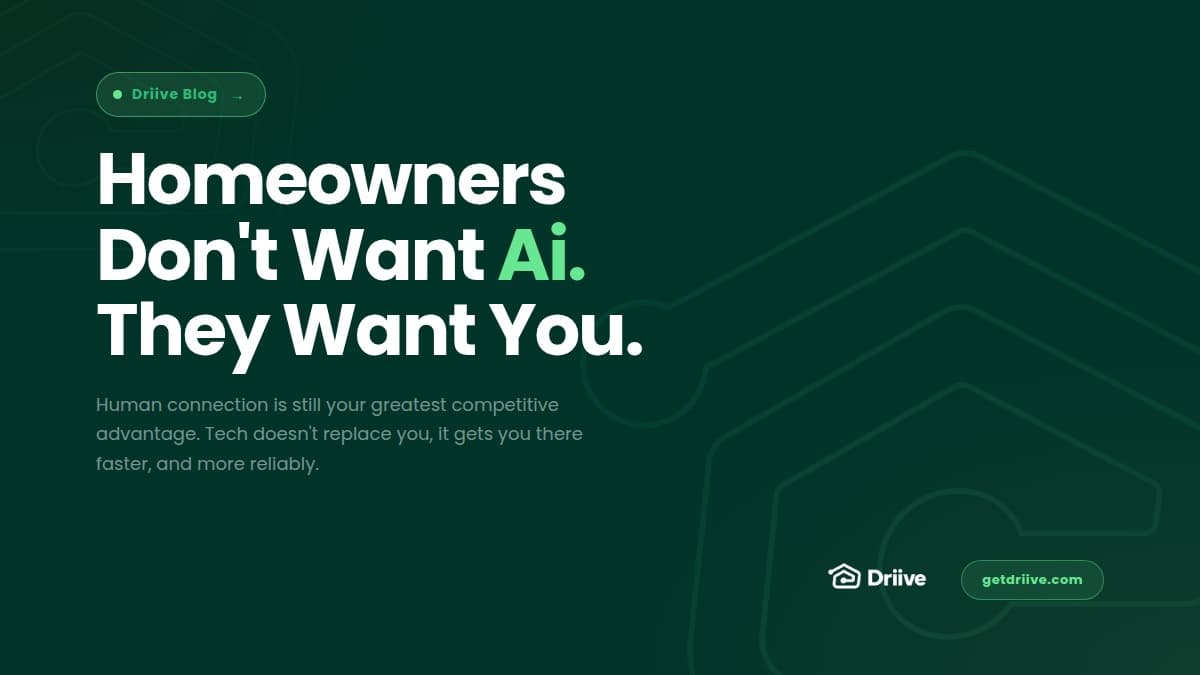

84.7%
of consumers prefer humans over AI
80.1%
still prefer humans even when AI resolves the issue
~40%
of pros actively use AI in their business
There's a narrative going around in the home service industry right now that AI is coming for jobs. That the scheduler is getting replaced. That the salesperson is next. That eventually a robot shows up at the door instead of your best tech.
Here's the actual take: the businesses that lose to AI won't lose because AI replaced their people. They'll lose to other businesses who implemented AI better, faster, or more effectively.
Homeowners don't want to talk to a bot. They want a real person who shows up on time, knows what they're doing, and doesn't make them feel like a number. That hasn't changed and it won't. But what homeowners also want, and honestly what most field service businesses are still figuring out how to deliver consistently, is speed, responsiveness, and efficiency. That's where AI belongs. Not in front of the customer. Behind the scenes, clearing the path so your people can do what only people can do.
The Data Is Clear: People Want People.
This isn't just a gut feeling. A Metrigy study cited by No Jitter found that 84.7% of consumers would prefer interacting with a human over an AI agent. And even when people were told the AI would fully resolve their issue, 80.1% still preferred a human.
That number is striking. It tells you that for most people, the experience of talking to a real person has value beyond just getting the problem solved.
The same study did show where consumers are open to AI: directing them to the right person, confirming scheduling, and handling simple transactional tasks. That's a meaningful distinction. People don't want AI for the moments that matter. They're fine with AI handling the logistics in between.
The same pattern shows up in the trades specifically. According to Housecall Pro's 2025 AI in the Trades report, contractors who are seeing the biggest gains from AI aren't using it to replace customer-facing roles. They're using it to clear the administrative and logistical load off their teams so those teams can focus on the work that actually requires a human.
The takeaway isn't "AI bad, humans good." It's more nuanced than that. AI is genuinely good at the parts of your business that are transactional, repetitive, and logistical. Humans are genuinely irreplaceable for the parts that require judgment, trust, and relationship. The businesses that figure out how to use each for what it's actually good at will run circles around the ones still treating this as an either-or question.
The Real Bottleneck Isn't Your People. It's the Logistics Around Them.
Think about what actually happens when a new lead comes in to a home service business. Someone calls or fills out a form. A person in the office checks the calendar, figures out which tech is available, tries to figure out where they'll be that day, and then calls the homeowner back. Sometimes an hour later, sometimes the next morning.
By then, that homeowner has already called two other companies.
The person in your office isn't slow. The process is slow. They're doing three jobs at once: qualifying the lead, playing scheduling Tetris, coordinating with techs in the field, and trying to be the warm, helpful voice of your brand that makes a homeowner feel good about hiring you. That's a lot to carry. Something gets deprioritized. Usually it's the human part.
This is actually where a lot of home service businesses quietly lose jobs without realizing it. If your booking process involves any back-and-forth before someone gets confirmed, you're in a race you may not know you're running. (If you want to tighten that up on the front end, we wrote about how to use your booking form to pre-qualify leads in a way that routes the right people to the right team member automatically.)
AI doesn't fix this by replacing that person. It fixes it by taking the Tetris off their plate entirely. So the first thing out of their mouth when they pick up the phone is "great, we can have someone to you tomorrow morning, and they'll actually be coming from a job three miles away" instead of "let me check on that and call you back."
That's not a small difference. That's the difference between booked and not booked.
Truly Great Work Still Can't Be Done By a Robot.
A homeowner with a flooded basement doesn't want an AI. They want a calm, competent person who shows up, assesses the problem, explains what needs to happen, and gives them confidence that it'll be handled. That requires a human being.
A roofing estimate isn't a form submission. It's a conversation. HVAC troubleshooting requires someone who can hear something off about a system before they even touch it. A plumber who's worked a neighborhood for ten years knows things about the pipes in those houses that no algorithm has.
The craft, the judgment, the trust. Those are irreplaceable. And they're also exactly what gets crowded out when your best people are spending half their day on scheduling logistics instead of selling, serving, and showing up.
AI belongs in the logistical layer. The coordination, the routing, the qualification, the follow-up reminders, the rebooking when something falls through. Let the machine handle the machine work. Save the human work for humans.
Your Office Staff Are Your Best Closers. If You Let Them Be.
The person who manages your schedule right now is probably one of the most important people in your business. They're the first voice a homeowner hears. They set the tone for the entire customer experience. And in most home service companies, they're being used almost entirely as a logistics coordinator.
What happens when you take the scheduling logistics off their plate?
They close more jobs. Not because they suddenly got better at sales, but because they now have the bandwidth to actually have the conversation. To ask the right questions. To hear what the homeowner actually needs and match it to the right service. Hot leads that would've self-booked online aren't the ones that need the human touch anyway. The jobs worth selling are the ones where someone's on the fence, comparing you to a competitor, or trying to figure out if something is even worth fixing. That's where your best person needs to be focused.
They create better customer experiences. The homeowner who got booked automatically and then got a real, warm check-in call an hour later? They're leaving a five-star review. The one who was put on hold while someone figured out the schedule? They've already moved on. AI handles the transaction. Your people create the relationship.
They retain customers for life. Repeat business and referrals in home service come from how people feel after the job is done, not just whether the work was good. A follow-up call, a rebooking offer before peak season, a simple "how did everything go?" Those touchpoints require a real person with real time. AI creates that time. One thing worth looking at here: if your team is still routing new leads by whoever picks up the phone first, you may be leaving jobs on the table. We covered why round robin lead distribution is quietly killing home service sales in 2026 and what to do instead.
AI Is Already Deciding Who Gets the Next Customer.
Here's something worth sitting with. A recent Forbes piece on AI and home service made the case that AI is already influencing which companies get found, which ones get called, and which ones get booked. Not in some distant future scenario. Right now, today, in the markets most of us are operating in.
The companies that show up faster, respond more intelligently, and make it easier to book are winning the comparison that happens before a homeowner ever picks up the phone. AI is doing a lot of the work behind that. The question isn't whether AI will affect your business. It already is. The question is whether you're using it, or whether your competitors are using it better than you.
I get that the word AI makes a lot of people in this industry uncomfortable. It can feel like something being done to you rather than something you get to use. That's a fair reaction. New tools always feel that way at first.
But here's what I keep coming back to: people aren't going to be replaced by AI. They're going to lose to other businesses who implemented AI better, faster, or more effectively.
This Is Exactly What We Built Driive to Do.
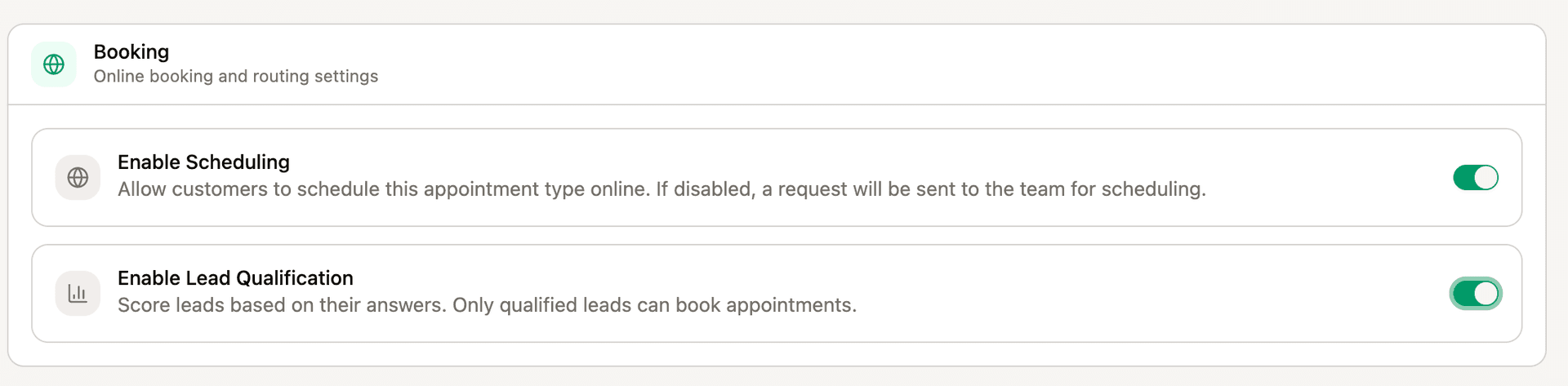
Driive's AI isn't designed to replace or displace anyone on your team. It's designed to take the logistical weight off their shoulders so they can be more human, not less.
**AI Lead Qualification** means your office staff stops spending time on leads that were never going to convert. Smart forms qualify and route automatically, so the first person-to-person conversation happens with a lead who's already ready to book, not one who's just kicking tires.
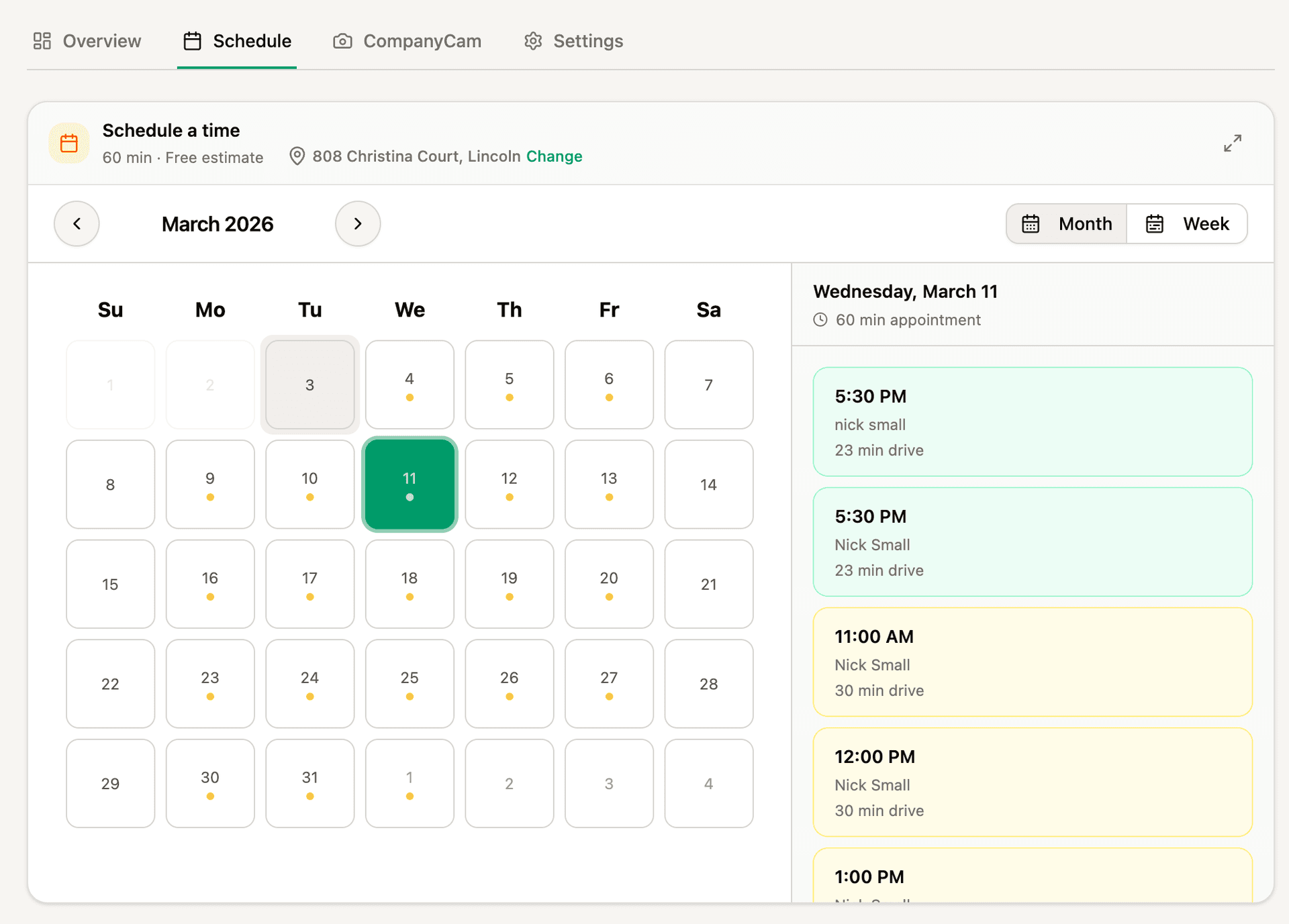
**Drive-Time Smart Booking** means your schedule stops being a puzzle someone has to solve every morning. Driive looks at where your team already is and finds the optimal time slots based on real drive time, tech availability, and job type. The result is a schedule that actually makes sense, and a team that spends more time on jobs and less time in traffic.
Together, those two things free up the people in your business to do what closes jobs and builds loyalty: have real conversations, deliver great service, and follow up like a company that actually cares.
The goal was never to automate your business. It was to automate enough of your business that the human parts work better. See how it works.
Let AI handle the logistics. Let your people close the jobs.
Driive qualifies leads automatically and books the right tech at the right time, so your team spends less time on scheduling and more time on selling and serving.
Cancel anytime. No commitment. No setup fees.